Interview • Portraits
Trainer Spotlight| Leading with Purpose: Human-Centred and Sustainable Leadership in a Complex World
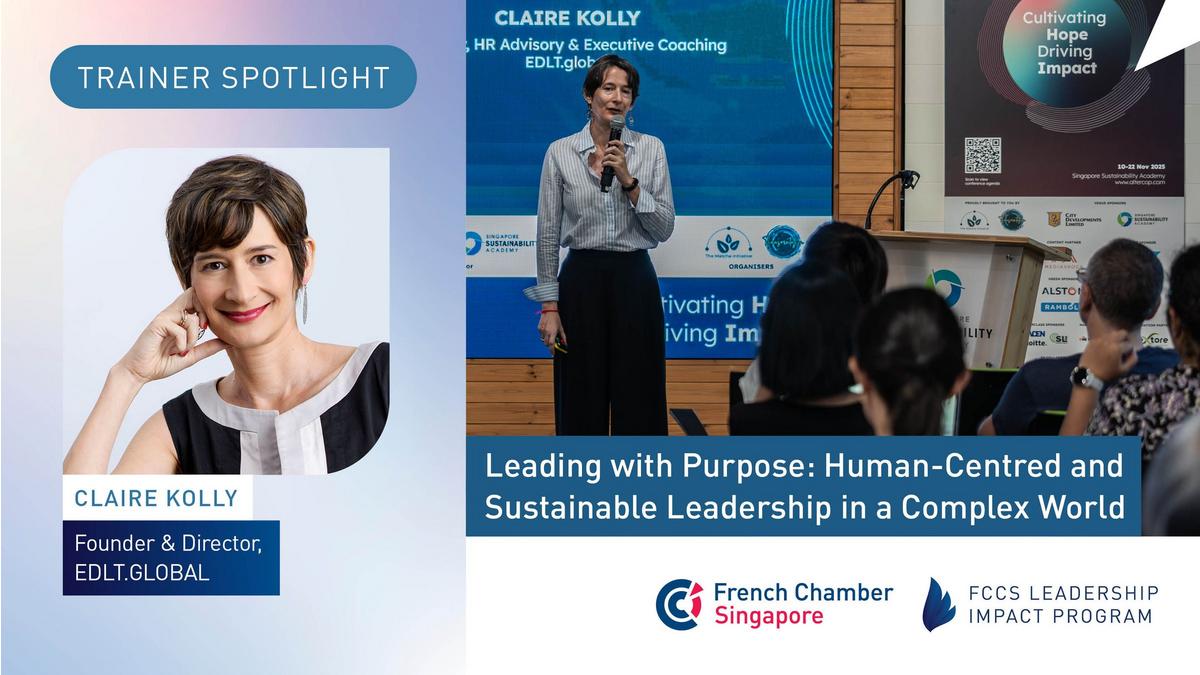
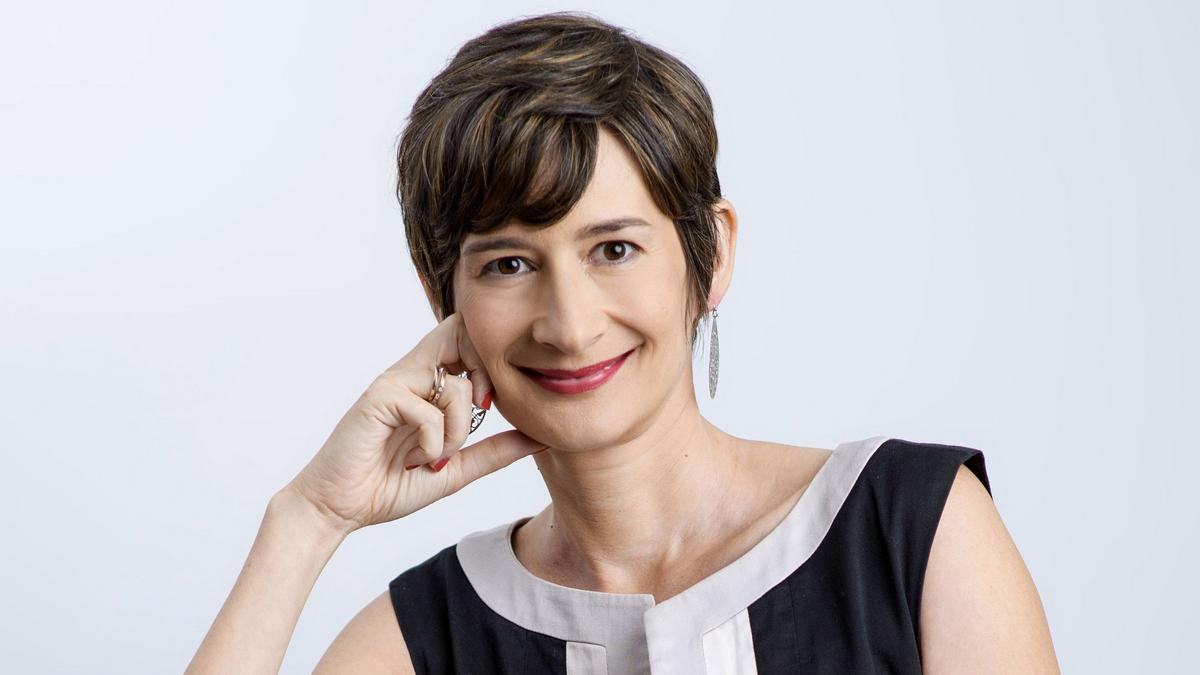
Claire Kolly, Founder and Director at EDLT.GLOBAL, shares how purpose-driven and human-centred leadership is reshaping organisations today.
In your experience working with executives, what are the key leadership qualities needed to build truly human-centred and sustainable organisations?
One can advocate that good leadership is responsible leadership. Makes sense and sounds right. But it’s not enough.
It has to demonstrate a competitive advantage. In a world reshaped by crises and rapid disruptions (geopolitical, technological and generational), staying in the game is more complex than before.
And that’s where thinking “human” and “sustainability” do matter. They bring permanence to be successful in the long run.
To support this, many leadership qualities are important. If I were to pick 3:
- Ethics: Your compass. How and by which principles we make decisions and treat people. Ethics ensures consistency and integrity, especially under pressure.
- Agency: The ability and confidence to navigate ambiguity, see possibilities over obstacles, and adapt to change. Agency brings stability and purpose.
- Listening: Often overlooked, but essential. Great listeners uncover frustrations, foster collaboration, and build trust. Listening supports decisions that benefit all parties.
What are the biggest leadership challenges today in balancing performance, people, and long-term impact?
The core challenge is indeed “ balancing”, because these priorities don’t always align and create tensions, at the expense of one another.
In my work advising organisations and teams on developing sustainable leadership strategies and practices, I often observe 3 challenges:
- How to define long-term impact: probably the hardest question! What is impact for me/us? How can it be positive for our ecosystem, our business, our people?
- How to resist the tyranny of the urgent: Favouring long term view takes a lot of courage. Is what I am doing now truly aligns with our long-term vision?
- How to integrate people into the equation: Think regeneration and adaptation rather than extraction. How do I bring my people along?
Short term priorities favour an extractive mindset, overlooking the people aspect create “human debt” (on employability, performance and engagement) and undefined long-term impact blurry your vision.
Solving this equation puts you ahead of the game.
You recently led a session of the FCCS Leadership Program on prioritisation and ways of working. What mindset or tools help leaders focus on what truly matters under pressure?
No matter what, start with clarifying your priorities:
- What will make me proud?
- What is my mission?
- What is expected of me?
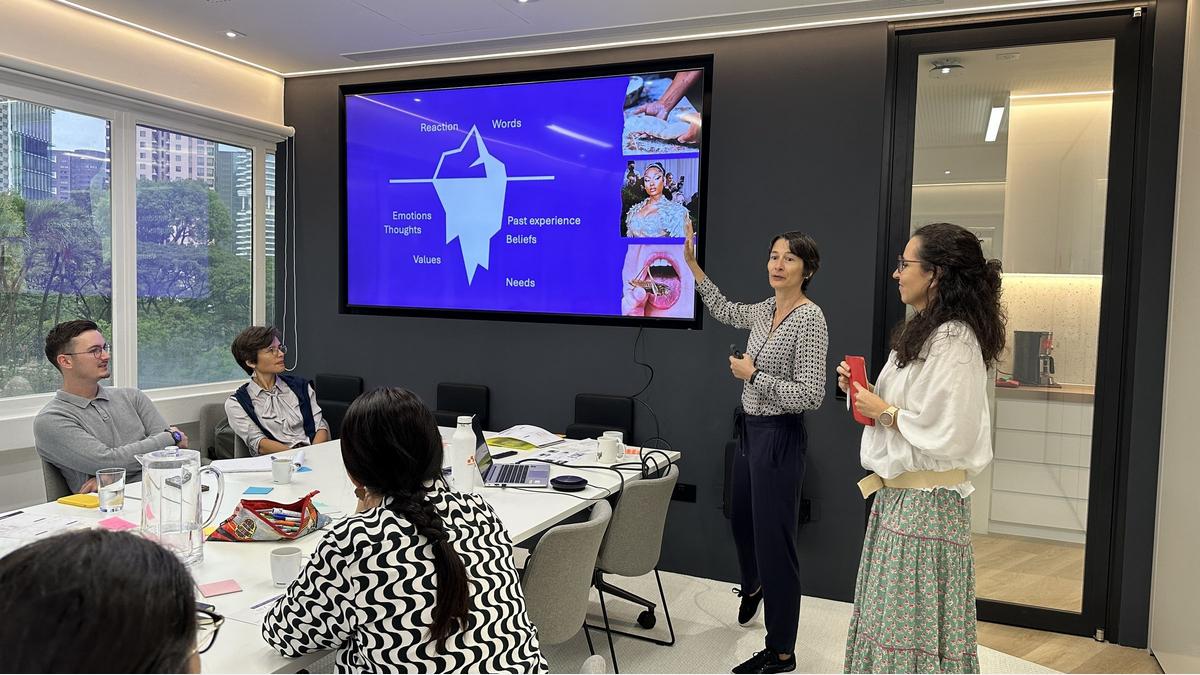
These questions reveal your "big rocks". In the workshop, I use the analogy of big rocks, pebbles, and sand: If your time is filled with "sand" (trivial tasks), there’s no room for “big rocks” : for what’s transformative and important.
One you have your big rocks, answers come more easily.
CLAIRE KOLLY is one of the trainers of the FCCS Leadership Program, bringing her expertise in personal branding directly to FCCS members seeking to strengthen their leadership presence.