Companies news
How is UOB Mobilising Sustainable Finance in ASEAN Region?
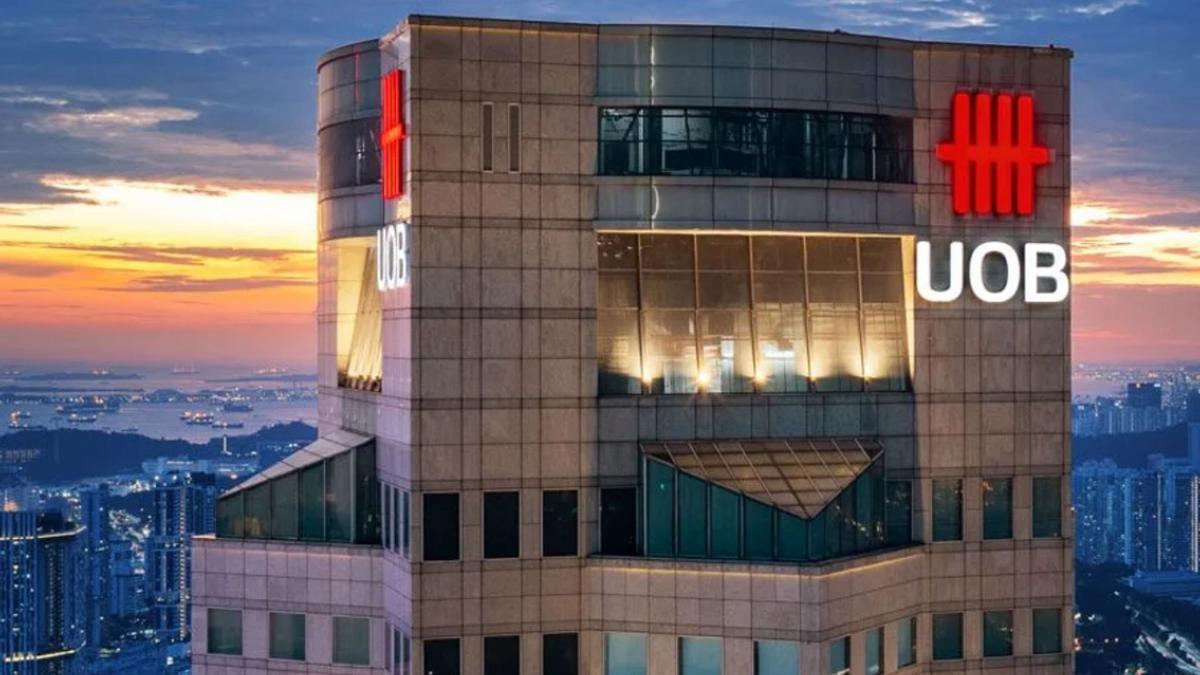
Credit: UOB
United Overseas Bank (UOB) has mobilised US$70.1bn in sustainable finance in 2025, supporting the transition to green revenue in Southeast Asia
United Overseas Bank (UOB) has more than 500 offices in 19 countries and territories, including Thailand, Malaysia, China, Indonesia and Vietnam.
It operates across the Association of Southeast Asian Nations (ASEAN) economic region.
UOB has released its 2025 Sustainability Report, outlining its work on climate action, sustainable finance and health-related loans.
UOB’s climate action
UOB’s purpose is to build the future of ASEAN, which is supported by its sustainability framework.
This involves driving growth in a sustainable way, keeping customers at the centre of its operations and strengthening corporate social responsibility.
To help tackle climate change, UOB says it is committed to building the resilience of its lending and investment portfolio, while supporting the region’s transition to a low carbon economy.
It also acknowledges the opportunities for transition and adaptation in Southeast Asia, as the region could generate up to US$300bn in annual green revenue by 2030.
This can be done through expanding clean energy, low carbon industries and nature-based solutions.
UOB says that financial institutions will be critical enablers of this clean energy transition.
Eric Lim, Chief Sustainability Officer at UOB, writes on LinkedIn: “A decade ago, we made a commitment to transparency, accountability and building a sustainable future for ASEAN and beyond. Ten years on, that commitment has only deepened.
“This is also the first year we have integrated net zero progress reporting and we continue to strengthen our climate disclosures with reference to the IFRS Sustainability Disclosure Standards. We have also deepened our focus on nature-related engagement with our clients and the wider ecosystem.

Eric Lim, Chief Sustainability Officer at UOB
“Amid ongoing global uncertainties and geopolitical tensions, we remain focused on sustaining progress through a balanced and pragmatic approach, grounded in steadfast purpose and disciplined execution. While there is more work ahead, we remain firmly committed to playing our part.”
Sustainable banking
Throughout the development of its financial products, UOB aims to embed ESG considerations, in order to support long-term economic, ecological and societal wellbeing.
In 2025, the company mobilised US$70.1bn in sustainable financing, which included US$7.8bn to help accelerate SMEs’ sustainable business practices.
It worked on enhancing its sustainable finance frameworks to deepen its support of SMEs’ decarbonisation efforts.
UOB’s sustainable banking products aim to address the ESG risks and opportunities of its business, including ones that tackle climate change, natural capital and biodiversity and human rights.
Wee Ee Cheong, Deputy Chairman and CEO of UOB, says: “2025 was a challenging year as sustainability ambitions shifted in an increasingly fragmented world. In times like these, our purpose matters more than ever.

Wee Ee Cheong, Deputy Chairman and CEO of UOB
“We remain steadfast in supporting our customers, colleagues and communities, with a steady, grounded approach to deliver meaningful impact across the region.
“UOB is committed to being a long-term enabler of our customers’ sustainability journeys. We balance environmental integrity with practical economic realities.”
Financing the healthcare sector
UOB’s sustainable financing portfolio covers a variety of sectors, including data centres, renewable energy and healthcare.
Its portfolio comprises 57% real estate and hospitality, 10% in energy and chemicals and 5% in consumer goods and healthcare.
This includes a US$300m sustainability-linked loan to IHH Healthcare, which is the company’s first loan to the healthcare sector.
It is also UOB’s first loan of its kind, as it continues working on its commitment to cap carbon growth and improve waste management.
UOB’s portfolio also covers many investment themes, including access to finance, education, agriculture and healthcare.
SOURCE: SUSTAINABILITY MAG